|
|
|
Abstract
Technical difficulties associated with transaction-by-transaction taxation methods
have led financial services to be exempt in most countries. Methods applying the
value added tax to financial services attempt to address this issue. This paper
expands existing knowledge by integrating these methods into a single, unique formulation.
A unified framework for generalising and characterising these approaches
is presented, facilitating a new classification based on either shadow or implicit
prices. Furthermore, two new variants of the mobile-ratio method for individual
transactions, utilising either shadow prices or “explicit-made” implicit prices, are
derived. These variants improve and address critiques from previous methods.
Keywords: value added tax; financial services; financial VAT; methods of taxation; optimality
JEL: H25, H21, D61
1 Introduction
Value added tax (VAT) is among the most sophisticated and modern forms of taxation, offering significant benefits in terms of efficiency and revenue collection. Nonetheless, a VAT exemption for financial services remains in force in most countries due to the technical and practical difficulties of taxing them on a transaction-by-transaction basis. The European Commission ( 2021) has recently consulted financial entities regarding the potential elimination or reform of this exemption (Pardete, Santos and Leote, 2024). Although the exemption results in the under-taxation of the sector, unrecoverable input VAT also creates inefficiencies and economic losses for banks. Indeed, other countries, such as China and Brazil, have either recently implemented or are currently transitioning towards taxing financial services under a VAT regime. 2021) has recently consulted financial entities regarding the potential elimination or reform of this exemption (Pardete, Santos and Leote, 2024). Although the exemption results in the under-taxation of the sector, unrecoverable input VAT also creates inefficiencies and economic losses for banks. Indeed, other countries, such as China and Brazil, have either recently implemented or are currently transitioning towards taxing financial services under a VAT regime.
Furthermore, this exemption leads to substantial losses in tax collection, undermines equity – given that the demand for many financial services is income elastic – and reduces efficiency. Over several decades, various authors ( inter alia, Poddar and English, 1997; Huizinga, 2002; Zee, 2005) have sought to estimate the value added of financial services on a transaction-by-transaction basis (applied to financial transactions – flow variables – rather than financial accounts – stock variables) to facilitate the removal of this exemption. The most promising approach involves the efficient full taxation of both implicit and explicit fees and commissions. To the author’s knowledge, this paper is the first to integrate the primary methods for applying VAT to financial services – specifically those that fully and accurately tax margin-based services – into a single, unified formula. A comprehensive framework for generalising and characterising these distinct methods is provided to reconcile differences in terminology and notation. Ultimately, this paper seeks to simplify the methods for applying VAT to financial services and serves as an instructive endeavour to enhance both the understanding and the subsequent improvement of these methods.
First, an overview of VAT is provided. VAT operates as a chain; a business applies the tax to its sales, and the customer pays this amount to the business, which is then required to remit it to the tax authorities. Conversely, the VAT paid on purchases (input VAT) and capital investments is paid by the business to its supplier and deducted from the output VAT. While this describes the process for an individual firm, the broader production cycle relies on the credit-invoice method.
However, this chain can be broken – most notably through exemptions, such as those applied to financial services in the majority of countries. The rationale for these exemptions is discussed later; first, the mechanics and immediate effects of exemptions are examined, drawing on the work of López-Laborda and Peña ( 2018) and the works they cite ( inter alia, Grubert and Krever, 2012). When an exemption applies, input VAT cannot be credited; the business pays VAT to its supplier but cannot deduct against output VAT. This break in the chain triggers tax cascading, as unrecovered VAT inflates the final product price and incentivises vertical integration to avoid tax liabilities. Furthermore, this leads to the under-taxation of services for final consumers – distorting consumption patterns (Baydur and Yilmaz, 2021) – alongside with the over-taxation of registered business customers, who cannot recover the VAT embedded in their purchase prices (López-Laborda and Peña, 2018).
The primary reason for the exemption is the technical difficulty of applying VAT on a transaction-by-transaction basis. This stems largely from the dual nature of financial institutions as both suppliers (e.g., creditors) and buyers (e.g., depositors) of capital, even when the financial entity is the sole provider of the service. A significant challenge lies in isolating the implicit fee or margin – defined as the difference between interest receipts and payments – within a single transaction that may only involve interest receipts or payments.
Accounts-based approaches (utilising financial accounts rather than individual transactions) offer alternatives, such as the addition method used in Israel or Denmark, or the subtraction implemented in Italy via the regional production tax ( imposta regionale sulle attività produttive – IRAP) unrelated to the national VAT, and proposed in Japan. However, these methods still interrupt the VAT chain unless universally applied. Consequently, the application of VAT to financial services remains an “unresolved issue” (Christiansen, 2017: 2), particularly regarding transaction-level implementation.
Another rationale for exempting financial services from VAT is the ongoing debate regarding whether such services yield direct consumer utility (Christiansen, 2017), whether they constitute final objects of utility (Boadway and Keen, 2003), or if only explicit fees should be subject to the tax (Jack, 2000). Grubert and Mackie ( 2000) go further, questioning whether an explicit tax on these services is justified at all. However, the point Grubert and Mackie originally make is that there is no consumption in borrowing and repaying with interest. At least insofar as the interest is the risk-free rate of return, the borrowing and interest merely changes the time of consumption but is not consumption itself. In the paper written by Grubert and Krever ( 2012), they acknowledged the original view was incorrect as it failed to take into account that part of the interest paid was in addition to the risk-free rate of return interest, which merely changes the time of consumption, and its consideration for a supply that involves actual consumption of economic resources by the intermediary institution. This part of the interest, and only this part, he asserts should be subject to VAT.
The potential for positive tax revenue following the removal of the exemption is also questioned by examining the mechanisms of such taxation (Lockwood and Yerushalmi, 2019). Conversely, Auerbach and Gordon ( 2002) maintain that VAT should apply to inputs in the financial sector just as it does in other industries. Furthermore, taxing both explicit and implicit fees at a uniform rate avoids economic distortions (Peña, 2018). Weisbach ( 2019) recently reconciles the views of Grubert and Mackie ( 2000) with those of Auerbach and Gordon ( 2002), noting that both are predicated on the same logic: if financial services do not constitute consumption themselves, and if the resulting consumption can be taxed elsewhere, “there is no need to directly tax financial services” (p. 248).
Failing to levy VAT on both explicit and implicit financial fees also leads to distortions, as evidenced by recent empirical findings (Peña, 2026). Indeed, eliminating the exemption may yield beneficial effects on welfare – either by replacing distortive labour taxes (Buettner and Erbe, 2014) or when implemented at low general VAT rates (Baydur and Yilmaz, 2021). Such a move could also enhance tax collection and trade openness (Buettner and Erbe, 2014; Peña, 2018). Finally, removing the exemption may increase progressivity (Huizinga, 20022002; Peña, 2018), 1 without the distortions to the financial sector (Peña, 2018) observed with financial transaction taxes.
This paper proposes two variants of the mobile-ratio (MR) approach (López-Laborda and Peña, 2018), which, when combined with other existing methods, offer potential solutions to the primary critiques of a regime of application of VAT to financial services. The MR method identifies the value added of each transaction by applying an accounts-based calculation to determine the financial margin. This margin is divided by the sum of interest receipts and payments to produce a ratio. This ratio is updated quarterly and applied to individual transactions to calculate the VAT liability.
The methods proposed herein also refine other theoretically robust systems, such as the Cash Flow (CF), the Modified Reverse-Charge (MRC) or the Hybrid System (HS). The CF method (Poddar and English, 1997) determines value added as the spread between transaction interest rates and an indexing rate derived from short term bond yields. Conversely, the MRC (Zee, 2005) allows banks to choose the allocation between loans and deposits – a feature often criticised for its discretionary nature.
The General Mobile-Ratio methods introduced in this paper employ an implicit indexing rate. This is made explicit in the General Explicit variant, which mirrors the MR but utilizes transaction-by-transaction calculations for the value added rather than accounts-based ones. Finally, while the HS method is similar to the MR, it applies specific ratios to distinct types of operations, whereas the MR uses a single ratio for all business activities within a period. In contrast, the General Shadow variant proposed here employs a unique value-added ratio for every transaction. Consequently, these proposed methods address existing deficiencies in the literature and resolve the specific criticisms associated with the MR.
The general formulation presented in this paper, supported by the underlying economic model and theoretical framework of optimisation programmes, enables the classification of the most promising current approaches. These are categorised by their level of application (transaction, type of transaction, or business) and the nature of taxation. The latter is approached in two ways: using implicit prices for pure interest via subtractions, or using shadow prices for interest via multiplicative ratios. Furthermore, this framework clarifies existing concepts, allowing for the proposal of two variants of a General Mobile-Ratio method at the transaction level.
Specifically, two alternatives are proposed: the General Explicit variant, involving the subtraction of explicit-made implicit pure interest rates; and the General Shadow variant, which applies the first ratio calculated on a transaction-by-transaction basis, an approach hitherto unaddressed in the literature. These methods address existing weaknesses and resolve criticisms of current “ideal” methods. For instance, unlike the CF or MRC methods, the proposed approach avoids issues regarding the choice of indexing rates; furthermore, unlike the HS or MR methods, it accounts for both prices and quantities. Numerical examples are provided to illustrate these concepts. The paper is organised as follows: section 2 reviews the literature providing the basis for VAT and VAT applied to financial services. Section 3 provides a common example of comparison. Sections 4 to 6 explain, respectively, the Cash-Flow (CF), Mobile-Ratio (MR) and Hybrid System (H) methods. Section 7 establishes the theoretical framework, presents the general formulation, integrating the most relevant taxation methods into a single expression, and proposes the two variants of the new General Mobile-Ratio method. Section 8 discusses the results, while section 9 concludes.
2 The baseline for applying VAT to loan-deposit services
2.1 General VAT method
Consumption is determined via the indirect subtraction method, in which sales are pY, p is the price and Y the output, the purchases are qx, with x being the input and q its price and IG being the gross investment:
where τ denotes the standard VAT rate. For the sake of simplicity, gross investments are hereafter excluded from this analysis, except where their inclusion is strictly necessary. The exemption status implies that while financial activities are not subject to output tax, financial entities are unable to recover input VAT incurred on non-financial purchases. Consequently, the revenue collected by the State comprises two elements: the VAT payable on financial services – which is nil due to the exemption – and the irrecoverable VAT paid on inputs. As the latter cannot be credited, it typically yields a positive tax collection. Therefore, the revenue accrued by the Public Administration through the VAT exemption of these services, calculated via the credit-invoice (or indirect subtraction) method, is represented by the following analytical expression: | VATFS = VATi + VATS = 0 + τqx = τqx | (2) |
Here, VATFS denotes the Public Administration’s VAT revenue on financial services, VATi represents the payable VAT by the financial institution, and VATS denotes the input VAT incurred on non-financial purchases. It is charged by the supplier, but not allowed to be creditable for the financial institution. The non-taxation of the financial margin within a VAT regime exacerbates the price increase in the first period relative to the second, a phenomenon primarily driven by the non-recoverability of input VAT.
2.2 Country experience
In Israel, VAT is applied to loan intermediary services through a general multi-stage system (Goldman, 2017: 1). Expenses related to goods or services at every stage of production, distribution, and marketing are taxed at a standard rate of 17%. While financial institutions that grant the loans are subject to a Wage and Profit Tax (also at 17%) on wages, salaries and earnings, their services remain VAT-exempt, meaning that entities cannot deduct input tax. Consequently, customers who take loans from financial institutions are unable to recover the tax paid by the financial institution, and deposits remain exempt.
In Argentina, the taxable base consists of the gross interest received by financial entities. While the standard VAT rate is 21%, certain loan intermediary services benefit from a reduced rate of 10.5%. Furthermore, Argentina imposes a provincial indirect tax on gross turnover, distinct from the national VAT (Teijeiro, 2017). Following a similar trajectory to Argentina (Peña, 2018), China replaced its Business Tax regime with VAT on 1 May 2016, levying tax on the gross interest of loan supplies (Li and Krever, 2017). Although central bank and certain inter-bank loans are exempt, they are treated as exempt without credit, since input tax credits are denied. For most other loans, gross interest payments form the tax base; however, the inability of both borrowers and lenders to claim input tax credits effectively replicates the cascading effect of the former Business Tax.
Canada generally exempts financial services from the Goods and Services Tax/Harmonized Sales Tax (GST/HST). Entities providing both exempt and taxable supplies must apportion their input tax credit claims based on the extent to which inputs are utilised in taxable activities (Thang, 2017). Within the European Union, the granting of credit – where the full interest payment constitutes the taxable amount – is generally exempt without credit. Nevertheless, certain member states permit the “opt-to-tax” (O2T) for business-to-business (B2B) transactions (Englisch, 2017). Research suggests this method is more conducive to trade than alternative methods (Peña, 2018). In South Africa, a single-rate VAT applies to a broad base with minimal exemptions. While financial services are broadly exempt, explicit fees and commissions are excluded from this exemption and are thus subject to VAT. Input VAT may only be recovered if incurred for making taxable supplies, often determined by a turnover-based apportionment ratio (de Koker and Badenhorst, 2017).
Finally, New Zealand introduced a mechanism in 2005 allowing financial services suppliers to zero-rate supplies to specific GST-registered recipients (Pallot and Allen, 2017). New Zealand’s system eliminates VAT (GST in their case) entirely on B2B transactions. The Australian system reduces the GST levied on financial intermediary supplies equally for B2C and B2B intermediary services but does not eliminate it for either. The Singapore system provides a complete return of input tax for acquisitions equal to the proportion of loans that are B2B loans. While the law does not specify that the banks must apply the remission of tax to their B2B loans, competitive pressures have led to this result, with the Singapore system consequently considered a de facto zero-rating for B2B services via a surrogate regime. Australia’s GST model treats loan intermediary services as “input taxed” (exempt). To mitigate self-supply bias – which often disadvantages smaller competitors unable to bring services inhouse – Australia allows a “reduced input tax credit” (typically 75%) for specific inputs used in loan intermediary activities (Krever and Teoh, 2017).
2.3 The mobile-ratio method
López-Laborda and Peña (2018) propose a new method for levying VAT on financial services. This approach possesses desirable properties and is practically applicable. Termed the “mobile-ratio method”, it utilises a quarterly updated proportion to allocate the financial institution’s margin to individual transactions. Consequently, a near-complete taxation of the value added generated by financial services is achieved. This method is simple, neutral and easily administered. The authors’ proposal is validated using data from the central banks of several advanced countries. Section 5 provides a further explanation of the method from a deeper perspective.
3 Common example of comparison
Following Peña (2018), a closed economy is assumed, featuring a banking sector (hereafter referred to as “banking”) that performs identical financial operations of equal value. The economy further comprises households, the public sector, and firms. All financial operations provided by financial institutions are distributed equally between consumers and firms. We assume that across all methods, financial institutions and firms can pass through VAT applied to financial services to both consumers and other businesses. While the data represents a specific quarter, we assume that these transactions remain constant across all periods. Financial institutions are unable to recover input VAT on non-financial purchases due to the VAT exemption. These non-financial operations are detailed in table 1, based on an illustrative VAT rate of 10%. Non-financial purchases exclusive of VAT amount to €25, with €2.5 representing non-recoverable input VAT.
Table 1Non-financial operations under the exemption DISPLAY Table
Financial operations comprise the gross transaction amount plus a fixed commission – which remains constant across all operations – and a variable commission. For the latter, it is assumed that non-deductible input VAT is distributed proportionally based on the sum of the absolute values of financial operations from previous years for each transaction, as illustrated in table 2.
Financial entities distributed total profits of €12 and incurred personnel costs of €125. Consequently, the sum of profits and salaries amounts to €137. Furthermore, the bank margin (difference between interest receipts and payments) is €150, while total commissions (fixed and variable) rise to €14.5. Non-financial purchases amount to €25, with €2.5 of non-deductible input VAT. In aggregate, the margin plus commissions, net of taxes (subtracting non-deductible VAT), also reaches a total of €137. It is worth highlighting that the variable commission is settled by the bank for passing through the non-deductible input VAT to the consumers (this is the reason for the coincidence of both in €2.5).
Table 2Financial operations under the exemption DISPLAY Table
The profits of banking are:ΠB = I - G = D + IL - L + ID + VC + FC - VATInput - NFC - W =
4,000 + 200 - 4,000 - 50 + 2.5 + 12 - 2.5 - 25 - 125 = 12 | (3) |
Where I represents income, G expenses, D deposit amount, IL loan interests, L loan amount, ID deposit interest, VC variable commissions, FC fixed commissions, VATInput input VAT, NFC non-financial purchases and W wages. The tax revenue from these operations, received by the Public sector, constitutes the unrecoverable input VAT: | Tax Collection (TC) = VATInput = 2.5 | (4) |
The profits for customers (households and firms) are composed of: ΠP = NCF - D - IL + L + ID - VC - FC + W =
25 - 4,000 - 200 + 4,000 + 50 - 2.5 - 12 + 125 = -14.5 | (5) |
The aggregate profits from the whole economy reach (3) + (4) + (5): | ΠT = ΠB + TC + ΠP = 12 + 2.5 - 14.5 = 0 | (6) |
Summarising, the derived economic situation appears in table 3.
Table 3Economic situation by sectors and total economy with exemption DISPLAY Table
The “change” column serves to illustrate the variation between each examined method and the exemption method (zero value in table 3 since it is the exemption case). The “Total” entry represents the aggregate of all assets and liabilities.
4 Cash-flow method and analogous approaches
4.1 Formulation, explanation and criticisms
Despite the global application of diverse approaches to taxing financial services, “there is no place where an ideal VAT model has been adopted in practice so far” (James, 2015, cited in Antonov, 2024: 138). Indeed, the VAT was rarely discussed more than seventy years ago, with the notable exceptions of France and select academic or specialist texts (Keen and Lockwood, 2010). The transaction-by-transaction approach, frequently regarded in the literature as the most accurate, is the Cash-Flow (CF) method. Developed by Poddar and English (1997), this model differentiates between cash inflows and outflows, employing short-term bill rates as proxies for the “indexing rates” of implicit pure interest. Under this method, financial entities are considered to maximise the following financial margin:| MaxΠi = (ρiL - εi,I)L + (εi,I - ρiD)D | (7) |
Here, i denotes the corresponding financial transaction, while L and D represent the loan and deposit amounts. Furthermore, ρiL and ρiD refer to their respective interest rates, classified as outflows and inflows depending on whether they constitute negative or positive cash flows for the business. The indexing interest rates, denoted by εi,I, serve as proxies for the risk-free rate. Under the Cash-Flow method, these rates are approximated by the short-term Treasury bill rate (Poddar and English, 1997) or the central bank deposit rate (Næss-Schmidt, Heebøll and Lund, 2016). Conversely, the modified reverse-charging proposal developed by Zee ( 2005) suggests that the choice of indicator should be left to the discretion of bankers, resulting in a discretionary indexing rate. The VAT collected generated by each financial transaction is formulated as follows 2: | VATi = τ × [(ρiL - εi,I)L + (εi,I - ρiD)D-C] | (8) |
with C representing the recoverable input and investment VAT.
As Ernst and Young ( 1998) illustrate, an advantage of the method is that it is applied to the actual interest rate for credits, allowing banks to refund bad credits. Although Mirrlees et al. ( 2011) provide a positive outlook on the method, they maintain that its neutrality depends on the chosen indexing rate – the “normal” rate of return – being accurate. Using an excessively high indexing rate would overtax savings and under-tax loans, and vice versa, leading to distortions in financial activity patterns. There are several conceptual issues, such as the use of the same indexing rate for various operations regardless of whether there is a fixed or variable rate, maturity or other characteristics of the service (Ernst and Young, 1998). Furthermore, administrative issues exist; for instance, matching an indexing rate to the contract maturity of a financial service was considered “not feasible” by Ernst and Young ( 1998: 1). This method was analysed in practice by Ernst and Young in a 1998 pilot study for the European Commission, which tested the previous indexing rate and assessed the proposal of “a short-term inter-bank rate (either 1-month or 3-month rate)”. While current Information and Communication Technologies (ICTs) could resolve the administrative issues (Slemrod and Velayudhan, 2022) that rendered the method unfeasible in the past – due to the then-limited state of enterprise systems and high computing costs – certain conceptual issues remain unresolved and will be addressed in the following sections. These critiques suggest potential improvements to the approach, which will be analysed in section 7. Other methods in the literature include the Modified Reverse-Charging (MRC) approach developed by Zee ( 2005), which permits banks to choose the allocation of the estimated implicit fees among operations. A primary critique of this method is the discretionary nature of the bank’s choice.
4.2 Examples
A tax revenue consistent with the theoretical formulation of the addition method is derived for aggregate effects. Assuming that the indexed interests – proxied by Treasury bill rates (Poddar and English, 1997), central bank deposit rates (Næss-Schmidt, Heebøll and Lund, 2016), and rates determined by banks (Zee, 2005) – amount to €100, the resulting financial operations align with the analogous results from table 2 – but applied to the cash-flow method, as illustrated in table 4.
Table 4Application of the Peña (2018) example with the cash flow method DISPLAY Table
The CF method is applied to loans by subtracting the indexed interest (€100) from the loan interest (€200), with the resultant output then multiplied by the prevailing VAT rate. Furthermore, VAT applied to Explicit Fees and Commissions must be added to each transaction (e.g., €3×10% = €0.3). Regarding deposits, the deposit interest (€50) is subtracted from the indexing interest before the VAT rate is applied. Consequently, the economic position from table 4 remains equal to the one of the basic cash flow method. This is also consistent with the analogous tables from the next sections and methods, since there is identical calculated VAT received by the public sector.
A further different exercise for the implicit margin is provided in table 5, the format of which is maintained for the remaining methods. This example illustrates the mechanism employed in CF-type methods; it is adapted from the final table in Zee ( 2005), using the data given in the previous example from Peña ( 2018) at the 10% VAT rate, and also follows the procedure outlined in table 4 and formula (8).
Table 5Example of Zee (2005) applied to the CF and MRC methods DISPLAY Table
5 Mobile ratio
5.1 Formulation, explanation and criticisms
The Mobile-Ratio (MR) method, proposed by López-Laborda and Peña (2018), applies a similar ratio to the one of the Hybrid System Method described in section 6; however, it is updated quarterly and utilises a single ratio per business for each period. Consequently, the MR method establishes a distinct proportion for every firm.
Theorem 1. Maximisation of profits in a business applying the MR method 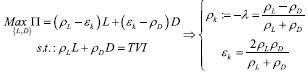 | (9) |
Proof: See appendix.
The preceding maximisation expression is similar to that of the previous methods (7); however, it incorporates the Total Value of Interests (TVI). Defined by López-Laborda and Peña ( 2018) as the sum of interest receipts and interest payments, the MR approach considers the business in its entirety rather than assessing each transaction in isolation. The variable ρ represents the “mobile ratio” according to the authors’ terminology. Within this model, it may be interpreted as a “shadow price” (a Lagrange multiplier, with a negative sign), signifying the approximate increase in the financial margin when one unit of TVI is raised. This method attains the primary desirable features of the transaction-based methods while maintaining the advantages of accounts-based methods. Furthermore, explicit fees are taxed via the credit-invoice method, ensuring the VAT chain remains intact as input VAT is recoverable.
The VAT collected for each business is determined as follows: | VAT = τ × [ρkρLL + ρkρDD - C] | (10) |
One critique, related to insurance services (Altenburger, 2022), suggests that because the original formulation of the mobile-ratio method does not account for capital amounts, insurance services – such as non-life insurance – are not adequately addressed. Additionally, insurance providers often experience periods with negligible expenditure, particularly during their initial phase of operations. This can lead to temporal mismatches between income and expenditures, which the mobile-ratio method may incorrectly reflect. 3
A second critique posits that loan interests are over-weighted in the obtainment of the payable tax amount. In this regard, the Tax Working Group Secretariat (WGS, 2018, fn. 10) of New Zealand, while noting the method’s potential simplicity, states that it “appears to attribute greater amounts of the financial service to borrowers rather than depositors”. This suggests a higher levy on loans than is perhaps appropriate, stemming from the “approximate” calculation of the value added on a transaction-by-transaction basis.
A further critique is offered by López-Laborda and Peña ( 2018), who confirm a trade-off between accuracy and neutrality – as well as between accuracy and feasibility. They argue that the cash flow method is conceptually accurate but “not feasible” in practice (Ernst and Young, 1998), at least prior to the advent of modern ICTs. The primary barrier to feasibility is the requirement to calculate the “pure” interest rate – the indexing rate – for every transaction to subtract it from the corresponding interest. While the MR method offers greater feasibility, it suffers from a degree of inaccuracy since the ratio used to estimate the value added remains constant across all transactions within a business.
5.2 Examples
A tax revenue is obtained that is equivalent to using the theoretical formulation of the cash flow method in aggregate. However, results for loans and deposits vary individually; this highlights that, within the CF framework, the selection of the indexation interest rate requires a degree of discretion due to computational difficulties. In contrast, the underlying indexation interest rate derived from the proposed method is highly representative of the short-term bond yields, consistent with the findings of López-Laborda and Peña (2018).
According to their formulation, the implicit pure interest would be €80, calculated as 2×200×50/(200+50)=80. Given that the mobile ratio is 60%, derived from (200-50)/(200+50), the financial operations align with the data presented in table 2 (see table 6).
Table 6Example of Peña (2018) with the MR method DISPLAY Table
This mobile-ratio method applies the ratio – calculated in aggregate via the addition method using data from the previous quarter – to the interest on loans and deposits. This approach is equivalent to the CF, utilising a financial services gravity equation for the indexation factor. VAT is levied on this sum, in addition to commissions. Example 5, sourced from the final table in Zee ( 2005), is illustrated in table 7 as applied to the MR method, following the procedure outlined in table 5, from which the hypotheses and given data are the same in this common example throughout the paper in order to make the methods comparable.
Table 7Example of Zee (2005) applied to the MR method DISPLAY Table
6 Hybrid system
6.1 Formulation, explanation and criticisms
Another proposal is the Hybrid System (HS), put forward by Bird and Gendron (2005), which consists of applying a ratio of the value added per type of transaction. A previous version, initially developed by Bakker and Chronican (1985) and termed “separate tax rate method”, was originally intended to apply only to margin-based operations. However, Bird and Gendron (2005) extended this method to explicit fees and commissions, developing the hybrid system explained here.
Theorem 2. Profit maximisation in a business applying the Hybrid System 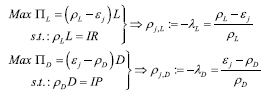 | (11) |
Proof: See appendix.
As can be observed, in contrast to the two previous methods, a single proportion is applied to each type of financial transaction; this indicates a transaction-type level analysis by j. Therefore, the proportion differs from loans and deposits, resulting in two maximisation programmes within the same business by distinguishing between market sectors. Specifically, there is a maximisation of profits for each type of financial transaction. The proportion also assumes the role of a shadow price (minus the Lagrange multipliers); in this case, it represents the increase in, respectively, interest receipts IR and interest payments IP.
The VAT collected for each business is as follows: | VAT = τ × [ρj,LρLL + ρj,DρD D-C] | (12) |
The method has several disadvantages. First, it requires some approximations. Second, it incurs higher administrative and compliance costs than aggregate methods, such as addition or subtraction. Third, as Gendron ( 2008) points out, obtaining data on the value added of each type of transaction – as well as the share of value added for each transaction relative to its total volume – can be complex and costly. Furthermore, it is occasionally difficult to distinguish between different types of transactions.
6.2 Examples
A tax collection is obtained that is equivalent in aggregate to that obtained via the theoretical formulation of the cash flow method and of the mobile ratio. However, the results for loans and deposits change individually due to the specific parameters of the example4 Simplifying the formulation of Bird and Gendron (2005), the proportion of interest is calculated using the same pure interest of €80 as in the previous method. Thus, the proportion for loan interest would be 60%, calculated as (200-80)/200, which is identical to that for deposit interests, (80-50)/50. These operations are shown in table 8 below, following the operations from table 2.
Table 8Application of the Peña (2018) example under the hybrid system DISPLAY Table
This hybrid system method applies a ratio per transaction. Knowing that it is difficult to distinguish among different types of transactions, in this paper it is proposed to apply the ratio given by equation (11). Following the methodology established by Zee ( 2005), an illustrative example is provided in table 7, adapted for the Hybrid System in accordance with the procedures detailed in table 9.
Table 9Zee’s (2005) example applied to the Hybrid System DISPLAY Table
7 Proposal: general formula and General Mobile-Ratio Method (G) variants
7.1 Formulation
Building on the development of the previous theoretical framework, this section proposes the General Mobile-Ratio Method (G). This framework calculates the value added on a transaction-by-transaction basis rather than applying the MR method as in the basic, original method. The new proposal integrates the use of mobile ratios with explicit indexed (implicit pure interest) rates. The classification of these methods is based on a new criterion: whether the system accounts for value added by subtracting implicit pure – or indexed rates – (Implicit Price Systems, IPS); or by applying shadow prices as proportions of interest rates (Shadow Price Systems, SPS). The proposed formula for VAT collection is as follows: | VATk = τ × [(ρμ,SPSρμL - εμ,IPS)L + (εμ,IPS - γρμ,SPSρμD)D - C] | (13) |
The specific cases are compared in the subsequent section. The subscript μ denotes the level of VAT collection, with μ ∈ ℕ + and μ = { i, j, k}: transaction-by-transaction (denoted by i, as in CF and proxies), business-level ( k, as in MR), or transaction-type level (by j, as in HS). Furthermore, IPS methods assume ρk,SPS = γ = 1 (encompassingCF and similar approaches), whereas SPS methods utilise εk,IPS = 0 and γ = –1 (including MR and HS), as they are additive rather than subtractive. The General Explicit (GE) and General Shadow (GS) variants are derived by applying IPS and SPS principles on a transaction-by-transaction basis. These utilise transaction-specific pure rates and mobile ratios derived from the optimisation problem presented in Theorem 3.
Theorem 3. Profit maximisation in a business applying the G method 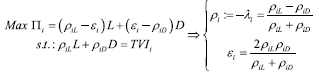 | (14) |
Proof: See appendix.
The individual mobile ratio functions as a shadow price (a negative Lagrange multiplier) with an interpretation similar to that in the MR method, albeit applied to an individual transaction. It represents the increase in the financial margin of a transaction resulting from a 1% increase in the total interest value of that transaction. The explicit pure interest rate is expressed as a rate rather than an absolute amount. These two variants offer several advantages: first, accuracy, by applying calculations to capital amounts at the transaction level, they improve upon the accuracy of the MR method. Second, insurance treatment, since they allow for the precise treatment of non-life insurance, which is claimed to be problematic under the MR method (Altenburger, 2022). Third, consistency, by eliminating the need to distinguish between transaction types (as in HS) and avoiding the allocation issues inherent in CF – such as when the indexing rate falls outside the spread between lending and deposit rates. Finally, objectivity, since they remove the discretionary estimation of rates permitted under the MRC approach.
The GE (15) and GS (16) variants are expressed as: 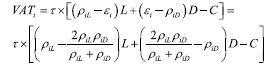 | (15) |
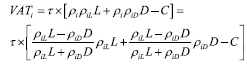 | (16) |
where εi and ρi represent the transaction-specific explicit pure rate and mobile ratio, respectively.
7.2 Examples
While the aggregate tax collection remains equivalent to previous methods, these variants provide greater granularity, achieving near-exact accuracy per transaction rather than per business (López-Laborda and Peña, 2018). Under the standard MR method, the implicit pure interest would be €80, 2×200×50/(200+50), and the individual mobile ratio would be 60%, (200-50)/(200+50). However, for both GE and GS, these values are calculated independently for each transaction, rather than being derived from the aggregate accounts of the business. The financial operations are detailed in table 2;specific applications are shown in table 10 (GE) and table 11 (GS).
Table 10Application of the Peña (2018) example under the GE method DISPLAY Table Table 11Application of the Peña (2018) example under the GS method DISPLAY Table
The following example, adapted from Zee ( 2005) and presented in table 12, applies the GE and GS methods according to the procedure outlined in tables 10 and 11.
Table 12Application of the Zee (2005) example to GE and GS methods DISPLAY Table
Table 13 provides a numerical example to show the policy implementation of the GE and GS methods. The table details the mechanisms for applying the chosen policy instrument – the tax rate – under the mobile-ratio method. Here, the tax rate is positive for interest receipts and negative for interest payments; this reflects that bank receipts and payments represent costs and revenues for the consumer, respectively. As shown in the preceding table, the tax paid to the public administration is calculated by multiplying the interest by the explicit pure interest rate and the individual-transaction mobile ratio (GS) from equation (16), and subsequently applying the VAT rate (10% in the example). Total interest receipts and payments are assumed to remain constant before and after taxes.
Since VAT is a consumption tax levied on households, the rationale is that it must result in a reduction of household income. It is important to note that interest receipts by and interest payments to a bank constitute, respectively, negative and positive income for households. Consequently, in the former case (a payment), the tax is added, whereas in the latter, it is subtracted by the bank. In this arrangement, the bank acts as the ultimate payee and administrator, transferring the tax from households to the public administration.
Table 13Illustration of tax application for GE and GS methods DISPLAY Table
8 Discussion
8.1 Particular cases and comparisons derived from the general formula
Table 14 summarises the primary theoretical differences encountered when applying the various existing methods (8-12) and the proposed methods (15, 16), in light of the general formula (13) introduced in this study.
Table 14The general formula: comparison between margin-based methods DISPLAY Table
Table 14 provides a reminder of the general formula proposed for all main margin-based methods (13). The first column indicates the method applied, while the second reflects the new classification of these methods regarding the use of Implicit Price Systems (IPS) or Shadow Price Systems (SPS). Specifically, IPS covers all CF methods, their variants, and the previously proposed GE method. The remaining approaches (MR, HS and GS) are classified as SPS.
The third column accounts for the level of tax application, denoted by μ in the general formula (13). This takes the value i when applied differently for each financial transaction (CF, GE, and GS methods), the parameter k when applied per business (MR), and the value j when there is a distinct proportion for each type of transaction. The fourth column denotes the parameters for each method. These values remain consistent for IPS (using a subtractive approach, this is the rationale for γ = 1, hence maintaining the minus sign in formula 13), while differing on εk,IPS for SPS (using a multiplicative-additive way, this is the reason for γ = –1, thus adding with positive sign in formula 13). The general formula achieves different specifications for ρk,IPS. Finally, the fifth and sixth columns display the respective formulae and equations for the margin-based methods analysed, representing specific cases of the general formula (13).
8.2 Examples and comparison
Following the example in section 3, table 15 illustrates the economic situation resulting from the margin-based methods analysed above. This is compared with the VAT exemption for financial services shown in table 3 (section 3); this comparison is detailed in the final column, “Change” (with respect to table 3).
Banking profits remain as defined in expression (1), at €12. The public revenue generated by the Administration from these operations is: TC = 21% * (DL + IL - L - ID) + VATInput - VATInput =
10% * (4,000 + 200 - 4,000 - 50) + 2.5 - 2.5 = 10% * 150 = 15 | (17) |
profits for customers (consumers and companies) are: ΠP = CNF - D - IP + P + ID - CV - CF + W + TC + VATInput =
2 - 4,000 - 200 + 4,000 + 50 - 2.5 - 12 + 125 - 15 + 2.5 - 14.5 - 15 + 2.5 = -27 | (18) |
Total economic profits are the sum of (1), (2), and (3): | ΠT = ΠB + TC + ΠP = 12 + 15 - 27 = 0 | (19) |
The resulting economic landscape is summarised in table 15.
Tables 16 and 17 show the intermediary operations for determining the final VAT payable under the analysed margin-based (MB) methods; the former addresses existing literature, while the latter focuses on the proposed methods. The tables illustrate a diverse range of existing and proposed methods, all yielding the same aggregate result. They provide a practical and illustrative complement to the general formula, reflecting current practices while facilitating technical comparisons and the derivation of the aforementioned proposals. Finally, table 18 summarises the procedures of all the analysed MB methods using the example proposed by Zee ( 2005), further streamlining technical comparisons.
Table 15Peña’s (2018) example, calculation of the VAT payable and economic situation DISPLAY Table Table 16Peña’s (2018) example, financial operations: CF method and existing MB methods DISPLAY Table Table 17Peña’s (2018) example, financial operations: proposed MB methods DISPLAY Table Table 18Example of Zee (2005) applied to the GE and GS methods DISPLAY Table
9 Concluding remarks
This paper addresses various issues regarding the methods of taxing financial services under the VAT. First, I develop a theoretical framework from where the primary methods in the literature are derived, enabling the formulation of new approaches. Additionally, I provide a correspondence identified between the “mobile ratio” proposed by López-Laborda and Peña (2018) and the “separate tax rates” suggested by Bird and Gendron (2005). Second, I propose a unified mathematical expression that is employed to synthesise the most efficient methods found in the literature. Finally, I address some current critiques of existing ideal approaches and propose a new method with two variants. These improve upon existing models by applying individual ratios to each transaction (the General Shadow variant) or, equivalently, an explicit, pure interest rate – excluding fees and risk – per transaction (the General Explicit variant). A further refinement considers interest rates and transaction volumes to address concerns regarding start-up businesses and non-life insurance. Moreover, I address potential misallocations of value added between loans and deposits by developing a ratio for each transaction type, rather than a single ratio per business (as in the Mobile Ratio method, MR) or per transaction at a national level (as in the hybrid method). Finally, the “G method” is shown to achieve greater accuracy than the MR and higher feasibility than the Cash Flow (CF).
The proposed methods are better alternatives to apply VAT to financial services than current practices and methods for the following reasons. First, the proposals are generally more accurate with regard to the implicit pure interest, because they use (implicitly or explicitly) a theoretically derived formula to allocate the financial margin among borrowers and depositors rather the inaccurate approximated indexing rates used in the Cash-Flow (CF) and analogous methods. They are also more accurate than Hybrid System (HS) or Mobile-Ratio (MR) methods since the value added is calculated in a more granular way, transaction-by-transaction instead of per type of transaction or business, respectively. Second, the proposals are more feasible than others since they do not require the difficult process of distinguishing among different types of transactions (HS) nor approximated indexing rates that lead to technical problems and misallocations (CF).
Replacing the EU-harmonised VAT exemption G method for financial services could serve as alternative to be applied in the recent European tax reform that is planned on the application of VAT to financial services. This could be achieved by broadening the VAT base and applying the proposed General variants of the Mobile-Ratio method. Given that Gale ( 2020) recently proposed the MR and CF methods for the US, these variants also offer a solution for developing countries – such as those in Africa (Cnossen, 2019) – that may lack the Information and Communication Technologies (ICT) infrastructure required for complex methods (Buljan, 2021), such as the CF.
Appendix
MATHEMATICAL PROOFS Theorem 1. Maximisation of profits in a business applying the MR method 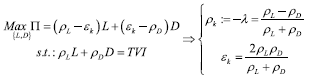 | (A1) |
Proof: From the maximisation problem, using L and D as target and decision variables and TVI as the Total Value of Interest according to López-Laborda and Peña ( 2018), the Lagrangian function can be written:  | (A2) |
The First Order Conditions (FOC) are: 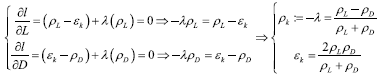 | (A3) |
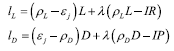
Theorem 2. Maximisation of profits in a business applying the Hybrid System 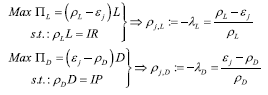 | (A4) |
Proof: The Lagrangian function can be written:
 | (A5) |
The FOC are: 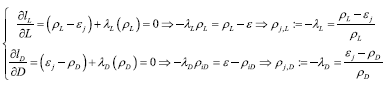 | (A6) |
Theorem 3. Maximisation of profits in a business applying the G method 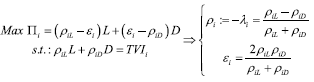 | (A7) |
Proof: The Lagrangian function is expressed as:  | (A8) |
The FOC are obtained:  | (A9) |
Funding
The author expresses his gratitude for the funding received from the project entitled “Municipios y servicios financieros:
shocks, ratios y efectos”, by the Fundación Ibercaja/Universidad de Zaragoza (JIUZ2022-CSJ-19); the
“S23_20R: Public Economics Research Group”, “S39_23R: ADETRE”, “PROY_S_15_24” and “LMP92_21:
Estrategias frente a la despoblación: enfoque multidisciplinar para una gestión integrada, inclusiva y dinamizadora”,
both funded by the Government of Aragon, and the research project “CISIO”: PID2024-157255NB-I00,
by the Spanish Ministry of Science, Innovation and Universities.
Notes
* The author would also like to thank two anonymous referees for their comments and suggestions.
1 The view that the demand for many financial services is income-elastic and their most common users have high income, so the benefit of applying VAT to such services is progressively distributed, has been suggested by the previous authors, but if it refers to loan-deposit intermediary services by financial entities, it is undercut by the fact that higher income persons often borrow through registered enterprises for investments rather than consumption loans so they would be in a position to claim input tax credits and recover VAT completely. Also, to the extent lower-income individuals used borrowed funds for investment purposes, they would be overtaxed if they could not register and recover input tax.
2 Notably, the current representations are abstractions of the underlying methods; the CF approach, for instance, accommodates the recognition of non-performing loans, unlike alternative methods.
3 I would want to thank Ben Lockwood for suggesting this idea to me at the OFS Workshop of Indirect Taxes, held on 30-31 March 2017, where the paper about the mobile-ratio method was presented.
4 Nonetheless, missadjustments can appear in real life, since they are approximations.
* The author would also like to thank two anonymous referees for their comments and suggestions.
1 The view that the demand for many financial services is income-elastic and their most common users have high income, so the benefit of applying VAT to such services is progressively distributed, has been suggested by the previous authors, but if it refers to loan-deposit intermediary services by financial entities, it is undercut by the fact that higher income persons often borrow through registered enterprises for investments rather than consumption loans so they would be in a position to claim input tax credits and recover VAT completely. Also, to the extent lower-income individuals used borrowed funds for investment purposes, they would be overtaxed if they could not register and recover input tax.
2 Notably, the current representations are abstractions of the underlying methods; the CF approach, for instance, accommodates the recognition of non-performing loans, unlike alternative methods.
3 I would want to thank Ben Lockwood for suggesting this idea to me at the OFS Workshop of Indirect Taxes, held on 30-31 March 2017, where the paper about the mobile-ratio method was presented.
4 Nonetheless, missadjustments can appear in real life, since they are approximations.
Disclosure statement
The authors have no conflicts of interest to declare.
AI declaration
No generative AI or AI‑assisted tools were used in the preparation of this manuscript.
References
Altenburger, O. A., 2022. Applying VAT to financial services: Is the new “mobile-ratio method” adequate for insurance? Zeitschrift für die gesamte Versicherungswissenschaft, 111(3), pp. 353-360 [ CrossRef]
Antonov, L., 2024. Value Added Tax on Financial Services in the EU: The Complete Story. Review of European and Comparative Law, 58(3), pp. 53-71 [ CrossRef]
Auerbach, A. J. and Gordon, R. H., 2002. Taxation of Financial Services under a VAT. American Economic Review, 92(2), pp. 411-416 [ CrossRef]
Baydur, I. and Yilmaz, F., 2021. VAT Treatment of the Financial Services: Implications for the Real Economy. Journal of Money, Credit and Banking, 53(8), pp. 2167-2200 [ CrossRef]
Bird, R. and Gendron. P. P., 2005. VAT Revisited, A New Look at the Value Added Tax in Developing and Transitional Countries. Toronto: International Tax Program, University of Toronto.
Buettner, T. and Erbe, K., 2014. Revenue and welfare effects of financial sector VAT exemption. International Tax and Public Finance, 21, pp. 1028-1050 [ CrossRef]
Buljan, A., 2021. Modernizing VATs in Africa. Public Sector Economics, 45(1), pp. 171-176 [ CrossRef]
Christiansen, V. 2017. Indirect Taxation of Financial Services. CESifo Working Paper Series, No. 6675 [ CrossRef]
Cnossen, S., 2019. Modernizing VATs in Africa. Oxford University Press.
de Koker, A. and Badenhorst, G., 2017. Loan Intermediary Services: South Africa. In: R. F. van Brederode and R. Krever, eds. VAT and Financial Services: Comparative Law and Economic Perspectives. Singapore: Springer Singapore, pp. 169-186.
Englisch, J., 2017. Loan Intermediary Services: European Union. In: R. F. van Brederode and R. Krever, eds. VAT and Financial Services: Comparative Law and Economic Perspectives. Singapore: Springer Singapore, pp. 123-138.
Gendron, P. P., 2008. VAT Treatment of Financial Services: Assessment and Policy Proposal for Developing Countries. Bulletin for International Taxation, 62(11), pp. 494-507.
Goldman, D., 2017. Loan Intermediary Services: Israel. In: R. F. van Brederode and R. Krever, eds. VAT and Financial Services: Comparative Law and Economic Perspectives. Singapore: Springer Singapore, pp. 139-158.
Grubert, H. and Krever, R., 2012. VAT and Financial Services: Competing Perspectives on What Should Be Taxed. Tax Law Review, 65, pp. 199-239.
Grubert, H. and Mackie, J., 2000. Must financial services be taxed under a consumption tax? National Tax Journal, 53(1), pp. 23-40 [ CrossRef]
Huizinga, H., 2002. A European VAT on financial services? Economic Policy, 17(35), pp. 497-534 [ CrossRef]
Jack, W., 2000. The treatment of financial services under a broad-based consumption tax. National Tax Journal, 53(4), pp. 841-851 [ CrossRef]
James, K., 2015. The Rise of the Value-Added Tax. Cambridge: Cambridge Tax Law Series.
Keen, M. and Lockwood, B., 2010. The value added tax: Its causes and consequences. Journal of Development Economics, 92(2), pp. 138-151 [ CrossRef]
Krever, R. and Teoh, J., 2017. Loan intermediary services: Australia. In: R. F. van Brederode and R. Krever, eds. VAT and Financial Services: Comparative Law and Economic Perspectives. Singapore: Springer Singapore, pp. 51-66.
Li, N. and Krever, R., 2017. Loan intermediary services: China. In: R. F. van Brederode and R. Krever, eds. VAT and Financial Services: Comparative Law and Economic Perspectives. Singapore: Springer Singapore, pp. 109-122.
Lockwood, B. and Yerushalmi, E., 2019. How should payment services be taxed? Social Choice and Welfare, 53(1), pp. 21-47 [ CrossRef]
López-Laborda, J. and Peña, G., 2018. A new method for applying VAT to financial services. National Tax Journal, 71(1), pp. 155-182 [ CrossRef]
Pallot, M. and Allen, T., 2017. Loan Intermediary Services: New Zealand. In: R. F. van Brederode and R. Krever, eds. VAT and Financial Services: Comparative Law and Economic Perspectives. Singapore: Springer Singapore, pp. 159-168.
Pardete, R., Santos, M. C. and Leote, F., 2024. Future VAT Regime for Financial Services from a Stakeholder Perspective: Analysis of the European Commission 2020 Public Consultation’s Position Papers. EC Tax Review, 33(1), pp. 33-46 [ CrossRef]
Peña, G., 2026. Better VAT for Both Explicit and Implicit Financial Fees. Public Budgeting and Finance. Forthcoming [ CrossRef]
Poddar, S. and English, M., 1997. Taxation of Financial Services under a Value-Added Tax: Applying the Cash-Flow Approach. National Tax Journal, 50(1), pp. 89-111 [ CrossRef]
Slemrod, J. and Velayudhan, T., 2022. The VAT at 100: A retrospective survey and agenda for future research. Public Finance Review, 50(1), pp. 4-32 [ CrossRef]
Teijeiro, G., 2017. Loan Intermediary Services: Argentina. . In: R. F. van Brederode and R. Krever, eds. VAT and Financial Services: Comparative Law and Economic Perspectives. Singapore: Springer Singapore, pp. 35-49.
Thang, S., 2017. Loan intermediary services: Canada. . In: R. F. van Brederode and R. Krever, eds. VAT and Financial Services: Comparative Law and Economic Perspectives. Singapore: Springer Singapore, pp. 87-108.
Weisbach, D. A., 2019. Financial Services Under a Consumption Tax: Grubert and Mackie (2000) Revisited. National Tax Journal, 72(1), pp. 237-249 [ CrossRef]
Zee, H. H., 2005. A New Approach to Taxing Financial Intermediation Services under a Value–Added Tax. National Tax Journal, 58 (1), pp. 77-92 [ CrossRef]
Altenburger, O. A., 2022. Applying VAT to financial services: Is the new “mobile-ratio method” adequate for insurance? Zeitschrift für die gesamte Versicherungswissenschaft, 111(3), pp. 353-360 [ CrossRef]
Antonov, L., 2024. Value Added Tax on Financial Services in the EU: The Complete Story. Review of European and Comparative Law, 58(3), pp. 53-71 [ CrossRef]
Auerbach, A. J. and Gordon, R. H., 2002. Taxation of Financial Services under a VAT. American Economic Review, 92(2), pp. 411-416 [ CrossRef]
Baydur, I. and Yilmaz, F., 2021. VAT Treatment of the Financial Services: Implications for the Real Economy. Journal of Money, Credit and Banking, 53(8), pp. 2167-2200 [ CrossRef]
Bird, R. and Gendron. P. P., 2005. VAT Revisited, A New Look at the Value Added Tax in Developing and Transitional Countries. Toronto: International Tax Program, University of Toronto.
Buettner, T. and Erbe, K., 2014. Revenue and welfare effects of financial sector VAT exemption. International Tax and Public Finance, 21, pp. 1028-1050 [ CrossRef]
Buljan, A., 2021. Modernizing VATs in Africa. Public Sector Economics, 45(1), pp. 171-176 [ CrossRef]
Christiansen, V. 2017. Indirect Taxation of Financial Services. CESifo Working Paper Series, No. 6675 [ CrossRef]
Cnossen, S., 2019. Modernizing VATs in Africa. Oxford University Press.
de Koker, A. and Badenhorst, G., 2017. Loan Intermediary Services: South Africa. In: R. F. van Brederode and R. Krever, eds. VAT and Financial Services: Comparative Law and Economic Perspectives. Singapore: Springer Singapore, pp. 169-186.
Englisch, J., 2017. Loan Intermediary Services: European Union. In: R. F. van Brederode and R. Krever, eds. VAT and Financial Services: Comparative Law and Economic Perspectives. Singapore: Springer Singapore, pp. 123-138.
Gendron, P. P., 2008. VAT Treatment of Financial Services: Assessment and Policy Proposal for Developing Countries. Bulletin for International Taxation, 62(11), pp. 494-507.
Goldman, D., 2017. Loan Intermediary Services: Israel. In: R. F. van Brederode and R. Krever, eds. VAT and Financial Services: Comparative Law and Economic Perspectives. Singapore: Springer Singapore, pp. 139-158.
Grubert, H. and Krever, R., 2012. VAT and Financial Services: Competing Perspectives on What Should Be Taxed. Tax Law Review, 65, pp. 199-239.
Grubert, H. and Mackie, J., 2000. Must financial services be taxed under a consumption tax? National Tax Journal, 53(1), pp. 23-40 [ CrossRef]
Huizinga, H., 2002. A European VAT on financial services? Economic Policy, 17(35), pp. 497-534 [ CrossRef]
Jack, W., 2000. The treatment of financial services under a broad-based consumption tax. National Tax Journal, 53(4), pp. 841-851 [ CrossRef]
James, K., 2015. The Rise of the Value-Added Tax. Cambridge: Cambridge Tax Law Series.
Keen, M. and Lockwood, B., 2010. The value added tax: Its causes and consequences. Journal of Development Economics, 92(2), pp. 138-151 [ CrossRef]
Krever, R. and Teoh, J., 2017. Loan intermediary services: Australia. In: R. F. van Brederode and R. Krever, eds. VAT and Financial Services: Comparative Law and Economic Perspectives. Singapore: Springer Singapore, pp. 51-66.
Li, N. and Krever, R., 2017. Loan intermediary services: China. In: R. F. van Brederode and R. Krever, eds. VAT and Financial Services: Comparative Law and Economic Perspectives. Singapore: Springer Singapore, pp. 109-122.
Lockwood, B. and Yerushalmi, E., 2019. How should payment services be taxed? Social Choice and Welfare, 53(1), pp. 21-47 [ CrossRef]
López-Laborda, J. and Peña, G., 2018. A new method for applying VAT to financial services. National Tax Journal, 71(1), pp. 155-182 [ CrossRef]
Pallot, M. and Allen, T., 2017. Loan Intermediary Services: New Zealand. In: R. F. van Brederode and R. Krever, eds. VAT and Financial Services: Comparative Law and Economic Perspectives. Singapore: Springer Singapore, pp. 159-168.
Pardete, R., Santos, M. C. and Leote, F., 2024. Future VAT Regime for Financial Services from a Stakeholder Perspective: Analysis of the European Commission 2020 Public Consultation’s Position Papers. EC Tax Review, 33(1), pp. 33-46 [ CrossRef]
Peña, G., 2026. Better VAT for Both Explicit and Implicit Financial Fees. Public Budgeting and Finance. Forthcoming [ CrossRef]
Poddar, S. and English, M., 1997. Taxation of Financial Services under a Value-Added Tax: Applying the Cash-Flow Approach. National Tax Journal, 50(1), pp. 89-111 [ CrossRef]
Slemrod, J. and Velayudhan, T., 2022. The VAT at 100: A retrospective survey and agenda for future research. Public Finance Review, 50(1), pp. 4-32 [ CrossRef]
Teijeiro, G., 2017. Loan Intermediary Services: Argentina. . In: R. F. van Brederode and R. Krever, eds. VAT and Financial Services: Comparative Law and Economic Perspectives. Singapore: Springer Singapore, pp. 35-49.
Thang, S., 2017. Loan intermediary services: Canada. . In: R. F. van Brederode and R. Krever, eds. VAT and Financial Services: Comparative Law and Economic Perspectives. Singapore: Springer Singapore, pp. 87-108.
Weisbach, D. A., 2019. Financial Services Under a Consumption Tax: Grubert and Mackie (2000) Revisited. National Tax Journal, 72(1), pp. 237-249 [ CrossRef]
Zee, H. H., 2005. A New Approach to Taxing Financial Intermediation Services under a Value–Added Tax. National Tax Journal, 58 (1), pp. 77-92 [ CrossRef]
|