|
|
|
Abstract
This paper examines socioeconomic inequalities in formal and informal home care
among Europeans aged 65+, using SHARE data from 27 countries. Results show that
health needs – especially age and functional limitations – are the main drivers of care
use. However, informal care is more common among lower-income groups, while formal
care is concentrated among wealthier and better-educated individuals. Most disparities
are explained by horizontal inequities linked to income, education, and marital
status, rather than differences in actual care needs. Even after adjusting for health
conditions, poorer populations rely more on informal care, indicating unequal access
to formal services. The findings underline the need for policies that improve access to
formal care, support informal caregivers, and reduce socioeconomic barriers.
Keywords: inequality; socioeconomics; formal care; informal care; SHARE data
JEL: I0, H4, R2
1 Introduction
Europe’s rapidly aging population poses profound challenges for long-term care (LTC) systems. As life expectancy rises, more older adults (65+) live with chronic conditions and functional limitations that require daily support.Traditionally, much of this support has been provided in institutional settings, but in recent decades home care has gained increasing importance. This shift is not only a response to demographic pressures and the limitations of institutional care but also reflects active policy efforts to promote the “ageing in place” agenda, which emphasizes enabling older adults to remain in their homes and communities for as long as possible (WHO,  2015; European Commission, 2021). Home care services typically include personal hygiene assistance, meal preparation, household chores, and other forms of daily support. Despite this policy emphasis, access to home care across Europe remains highly uneven. In many countries, eligibility for publicly supported LTC is means-tested, with income or asset assessments determining whether and to what extent older adults qualify for support (Colombo et al., 2011; Rodrigues, Ilinca and Schmidt, 2017; OECD, 2020). These rules often restrict access for low-income households and contribute to reliance on informal caregiving – family members, friends, or neighbours, especially where formal services are limited. Geographic disparities compound this inequality1, creating what is often described as a “postal code lottery” (Ilinca et al., 2017) where urban residents typically enjoy better access to services than those in rural areas. Research has consistently shown that socioeconomic factors such as income, education, and household composition shape the use of both formal and informal care, and that cross-national differences follow a clear North – South and East – West divide: formal care is more widely available in Northern Europe, while Southern and Eastern regions depend more heavily on informal provision (Haberkern and Szydlik, 2009; Rodrigues, Ilinca and Schmidt, 2017). The present study, however, has analysed inequalities in terms of horizontal equity (whether individuals with equal needs receive equal levels of care) and vertical inequity (whether individuals with greater needs receive proportionally more care) (Vallejo-Torres, 2013). In theory, care provision should increase in line with need, but in practice socioeconomic and contextual factors may distort this relationship. For example, a high-need individual in a low-income rural household may receive less support than a lower-need individual in a high-income urban setting. Understanding vertical inequity therefore requires examining not only the presence of care but whether its intensity appropriately reflects differences in need. Existing studies have considered horizontal and vertical inequities separately (Wagstaff and van Doorslaer, 2000; Morris, Sutton and Gravelle, 2005; Rodrigues, Ilinca and Schmidt, 2017), but little work has examined their combined effect. This paper introduces the concept of total inequality, the joint consideration of horizontal and vertical inequities – as a way to more comprehensively assess fairness in LTC.The present study has three main aims, to: (1) identify and summarize the key theoretical features of home care systems in Europe, (2) measure vertical inequity in long-term home care using a newly developed methodological approach, and (3) assess horizontal and vertical inequalities in the use of home care among older adults after accounting for need factors. 2015; European Commission, 2021). Home care services typically include personal hygiene assistance, meal preparation, household chores, and other forms of daily support. Despite this policy emphasis, access to home care across Europe remains highly uneven. In many countries, eligibility for publicly supported LTC is means-tested, with income or asset assessments determining whether and to what extent older adults qualify for support (Colombo et al., 2011; Rodrigues, Ilinca and Schmidt, 2017; OECD, 2020). These rules often restrict access for low-income households and contribute to reliance on informal caregiving – family members, friends, or neighbours, especially where formal services are limited. Geographic disparities compound this inequality1, creating what is often described as a “postal code lottery” (Ilinca et al., 2017) where urban residents typically enjoy better access to services than those in rural areas. Research has consistently shown that socioeconomic factors such as income, education, and household composition shape the use of both formal and informal care, and that cross-national differences follow a clear North – South and East – West divide: formal care is more widely available in Northern Europe, while Southern and Eastern regions depend more heavily on informal provision (Haberkern and Szydlik, 2009; Rodrigues, Ilinca and Schmidt, 2017). The present study, however, has analysed inequalities in terms of horizontal equity (whether individuals with equal needs receive equal levels of care) and vertical inequity (whether individuals with greater needs receive proportionally more care) (Vallejo-Torres, 2013). In theory, care provision should increase in line with need, but in practice socioeconomic and contextual factors may distort this relationship. For example, a high-need individual in a low-income rural household may receive less support than a lower-need individual in a high-income urban setting. Understanding vertical inequity therefore requires examining not only the presence of care but whether its intensity appropriately reflects differences in need. Existing studies have considered horizontal and vertical inequities separately (Wagstaff and van Doorslaer, 2000; Morris, Sutton and Gravelle, 2005; Rodrigues, Ilinca and Schmidt, 2017), but little work has examined their combined effect. This paper introduces the concept of total inequality, the joint consideration of horizontal and vertical inequities – as a way to more comprehensively assess fairness in LTC.The present study has three main aims, to: (1) identify and summarize the key theoretical features of home care systems in Europe, (2) measure vertical inequity in long-term home care using a newly developed methodological approach, and (3) assess horizontal and vertical inequalities in the use of home care among older adults after accounting for need factors.
To address these aims, the following research questions are posed: (1) What is the prevalence of formal and informal home care use among older adults (65+) in Europe? (2) Which socioeconomic factors (income, education, household composition, and living environment) enable or constrain access to home care? (3) To what extent do horizontal and vertical inequalities persist after controlling need for factors such as age, gender, and health status?
This paper draws on data from the Survey of Health, Ageing and Retirement in Europe (SHARE), Waves 8 and 9, covering 26 EU countries and Switzerland. Using regression-based approaches, it explores both horizontal and vertical inequities in access to LTC. By explicitly integrating both dimensions into a measure of total inequality, the study fills a key research gap and provides a more nuanced understanding of how socioeconomic disparities shape home care use across Europe.
The structure of this paper is as follows: the second part presents a literature review. The third part presents an overview of the data and methods that will be used in the research. The research results are presented in the fourth part. Conclusion and discussion of the research are contained in the fifth part of this paper.
2 Literature review
Socioeconomic inequalities play a central role in shaping access to LTC across Europe, influencing both formal and informal care provision. From a theoretical standpoint, these inequalities can be understood through frameworks such as the Andersen-Newman model, which distinguishes between predisposing factors (e.g., age, gender), enabling factors (e.g., income, education, family support), and need factors (e.g., health status, functional limitations) (Andersen and Newman, 1973). Together, these dimensions provide a lens for understanding why certain groups are more likely to access formal services, rely on informal care, or face gaps in support.
Gender emerges as a particularly salient predisposing factor. Women not only live longer than men on average but also experience higher rates of chronic illness and disability, which increases their demand for care (Jiménez-Martín and Prieto, 2011; Portrait, Lindeboom and Deeg, 2000). At the same time, gender intersects with household composition and socioeconomic resources. For example, single older women, who are more likely to live alone, face elevated poverty risks (Boudet et al., 2018) and may lack access to family-based informal care, while simultaneously shouldering caregiving responsibilities themselves (OECD, 2017; Da Roit and Le Bihan, 2010). This interplay illustrates how gendered social roles and family structures can amplify inequalities in care utilization. Income and education further shape these dynamics, acting as key enabling factors. Higher-income individuals can afford co-financed formal care, while lower-income households often depend on informal care, incurring significant financial and emotional costs (Theobald, 2003; European Commission, 2021). Income disparities are tightly linked to gender: older women, particularly those who are single or have interrupted work histories, frequently have lower lifetime earnings and reduced pension entitlements, placing them at a disadvantage in accessing formal services. Education reinforces these inequalities by influencing health behaviours, planning for aging, and knowledge of available services (Mirowsky and Ross, 2005; Ilinca et al., 2017). Better educated individuals are not only healthier but also more able to navigate care systems, increasing their likelihood of receiving services proportionate to need.
Health status and age operate as central need factors, interacting with socioeconomic resources to shape care outcomes. Individuals with more severe functional limitations or chronic conditions require greater support, yet evidence suggests that care often fails to match needs, particularly among disadvantaged groups (Rodrigues, Ilinca and Schmidt, 2017). For instance, a low-income older adult with multiple health limitations may receive less formal care than a wealthier individual with fewer needs, highlighting both horizontal and vertical inequities in LTC. Table 1 provides an overview of horizontal (in)equality and vertical (in)equity in the use of formal LTC.
Table 1Display of horizontal (in)equality and vertical (in)equity in the use of LTC services defined by the number of visits of professional caregivers (formal type of care) DISPLAY Table
Only situation B achieves complete fairness in LTC use. It satisfies both components of equity: (a) vertical equity – people with poorer health receive more professional care visits than those in better health; (b) horizontal equality – people with similar levels of need receive the same number of visits. Because situation B fulfills both principles at the same time, it is the only scenario that represents full equity in care use.
Geography and institutional context further compound these inequalities. Northern and Western European countries typically rely more heavily on formal care, supported by higher public expenditure and smaller family structures, whereas Southern and Eastern European countries depend primarily on informal family care due to cultural norms and lower public support (Fernandez and Forder, 2015; Zigante, 2018; Igel et al., 2009). Within countries, urban – rural disparities also affect access, as rural residents often face limited-service availability and greater travel distances. These geographic and institutional factors intersect with socioeconomic and demographic characteristics, amplifying disparities for women, low-income households, and older adults with high care needs.
Taken together, these studies suggest that inequalities in LTC are not the result of any single factor but emerge from the interaction of gender, income, education, health, household composition, and geographic context, mediated by public policy and social norms. Women with lower income and education, living alone in rural areas, are particularly vulnerable to both unmet care needs and reliance on informal provision. Despite this rich evidence, most studies treat formal and informal care separately and focus primarily on horizontal inequity, neglecting vertical inequity – the extent to which care provision scales with need. Addressing this gap requires a framework that simultaneously considers need, enabling resources, and structural context, forming the theoretical foundation for this paper.
3 Data and methods
This paper uses mixed-methods exploratory sequential design, combining qualitative interviews with quantitative analysis. The quantitative component draws on data from the SHARE survey, a large European panel study of individuals aged 50+ across 28 countries and Israel. The analysis uses cross-sectional data from two waves (2019/2020 and 2021/2022) and focuses on individuals aged 65 and older, with country-level results presented for 26 EU countries and Switzerland.
Formal LTC has been measured as professional support received in the past 12 months. Informal LTC captures non-professional support provided inside or outside the household. The two forms of care are analysed in parallel because they represent distinct components of the care system. Although the two are not treated as substitutes in this study, they are also not fully independent: informal care is more common at lower levels of need, and patterns of use can reflect cultural norms and the availability and capacity of family caregivers (e.g., their employment status, proximity, and other responsibilities). This contextual information is included here only to clarify why the two forms of care are modelled separately yet interpreted with awareness of their potential interaction.
Selected dependent and independent variables related to formal and informal care use are examined to assess inequalities and inequities in LTC utilization across countries and over time. Table 2 presents a list of independent variables used.
Table 2Explanations of independent variables that are used in the examination of inequality and inequity in home care DISPLAY Table
Correlation analysis has shown that ADL and IADL are highly correlated, and it can be said that they measure very similar constructs. To avoid the potential problem of multicollinearity in the analyses, by including both variables, a synthetic variable (I)ADL will be created as the average of the values of these two variables, which will be included in further analyses (Gross, Jones and Inouye, 2014; Hong et al., 2019). Since the scales of these variables are different, before calculating the average, the IADL variable will be multiplied by 6/9 to equalize the ranges of the two variables. In this way, the mean values and standard deviations of these variables are approximately equal, so the calculation of the synthetic variable is well founded. The (I)ADL variable was treated as a quantitative variable.
Apart from defining dependent and independent variables to assess inequality in care use, this research distinguishes between: (1) need (legitimate) factors: characteristics that justifiably affect care use, such as health status and functional limitations; (2) non-need (illegitimate) factors: characteristics that should not influence care use, such as income or education, which contribute to inequity if they do.
Inequality is measured using the concentration index (CI), which captures the distribution of care across socioeconomic status (SES). Horizontal inequity (HI) quantifies unequal treatment among individuals with the same needs, while vertical inequity (VI) captures inappropriate differences among individuals with unequal needs. Total inequality is the sum of horizontal and vertical inequity.
For binary care outcomes, nonlinear models (e.g., logistic regression) and marginal effects are applied. SES is measured by equalized household income, adjusted for household size and purchasing power parity (PPP). Sample sizes per country are determined from the SHARE dataset (SHARE-ERIC, 2024a, 2024b, 2024c, 2024d), with post hoc calculations ensuring sufficient precision for CI estimates.
3.1 Concentration index (CI)
Wagstaff, van Doorslaer and Paci (1991) introduced the concentration index (CI) to measure health inequalities. Derived from concentration curves, it illustrates the relationship between a health variable and socioeconomic status (SES). The x-axis ranks SES, while the y-axis shows the cumulative health outcome. CI quantifies inequality, assessing whether health care resources and outcomes are fairly distributed across SES groups. According to O’Donnell et al. (2007), the CI can be calculated as follows: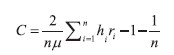 | (1) |
where hi is the health variable, μ its mean value, and  is the relative rank of the respondent i in the SES distribution, where i = 1 denotes the poorest and i = n the richest respondent. An equivalent formula for CI uses the covariance:  | (2) |
The concentration index (CI) ranges from -1 to 1, with negative values indicating higher prevalence of the health variable among the poor and positive values showing greater prevalence among the wealthy. A negative CI reflects disparities affecting lower socioeconomic groups, while a positive CI highlights inequalities favouring higher-income groups. The concentration index (CI) is influenced by the mean value of the health variable, which can complicate comparisons across populations or countries. Variations in average health outcomes may lead to misleading interpretations of inequality in different contexts. Erreygers ( 2009) provided a corrected version of the CI for binned variables that does not depend on the mean value of the variable: 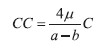 | (3) |
where a and b are minimum and maximum values of the health variable. The variables of formal and informal care are binary, and for them, a = 0 and b = 1.
3.1.1 Decomposition of the concentration index
The concentration index can be broken down into the contributions of different factors, which can also be quantified, that is, a CI decomposition can be carried out. The CI decomposition method uses regression models to break down the factor contributions. In its most basic form, where the health variable is quantitative (continuous), a linear regression model is appropriate: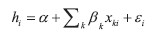 | (4) |
where xk represents individual factors, εt random errors, and α regression βk coefficients. Based on this model, the expression for the concentration index can be written: 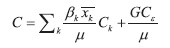 | (5) |
where  is the mean value of xk, Ck is the (partial) concentration index of the variable xk with respect to the SES measure, and GCε is the generalized concentration index of the random error. The concentration index is the weighted sum of partial concentration indices of independent variables, with weights determined by elasticity. The generalized random error concentration index (residual) represents unexplained inequality. These factor contributions can be positive, indicating a greater representation among the wealthy, or negative, reflecting a higher prevalence among the poor. The contribution’s sign depends on the elasticity and partial CI, where matching signs (++ or --) result in a positive contribution, and opposite signs (+- or -+) lead to a negative contribution. The decomposition method can also be applied to the corrected concentration index (Erreygers, 2009), and thus the following is valid:  | (6) |
Full formulas, derivations, and technical details for the decomposition of concentration index and inequity calculations are provided upon request.
4 Results
This analysis of older adults (65+) across 26 European countries and Switzerland addresses key questions about the use and distribution of LTC. In response to the first research question, it finds that informal care is generally more prevalent than formal care, with informal care use exceeding 30% in countries such as the Czech Republic, Austria, and several Nordic nations, while formal care ranges from just 1.9% in Romania to 28% in Belgium.4
These findings highlight the key theoretical features of LTC in Europe, namely that informal care often supplements formal services and is shaped by cultural norms, family structures, and state support, fulfilling the first aim of this research, to identify and summarize the key theoretical features of home care systems in Europe.
4.1 Decemposition analysis
Addressing the second research question, decomposition analyses reveal that socioeconomic factors – income, education, household composition, and living environment – significantly influence care utilization, but differently for formal and informal care. Higher-income and better-educated individuals are more likely to use formal care, particularly in Western Europe, whereas informal care often supports lower-income populations, especially in Sweden, Denmark, France, Germany, Spain, Italy, Greece, and Malta. Married individuals generally use slightly less care, rural residents rely more on informal care, and age consistently predicts higher care use. These findings relate directly to the third aim of this research: to assess horizontal and vertical inequalities in the use of home care among older adults after accounting for need factors such as age, gender, and health status.
In terms of horizontal inequity, formal care is largely equitably distributed when health needs are accounted for, whereas informal care remains concentrated among lower-income groups, indicating persistent reliance on family and social networks where formal services are limited. Vertical inequity, which measures whether care allocation is appropriate to varying levels of need, is generally small across Europe, with exceptions such as Sweden and the Czech Republic in the 9th wave, where formal care shows inequities favouring higher-income individuals. The inclusion of vertical inequity only modestly changes total inequality, confirming that horizontal inequities driven by socioeconomic factors are the main contributors to unfair disparities in LTC access, which directly addresses the third and fourth research questions and the second aim of this research: measure vertical inequity in long-term home care using a newly developed methodological approach. Health-related factors remain the strongest predictors of care use, with functional limitations (I)ADL, chronic conditions, and self-rated health increasing both formal and informal care utilization, while socioeconomic and demographic factors contribute additional but smaller effects. The decomposition confirms that older adults with poorer health rely more heavily on care, particularly informal care, supporting existing literature and validating the models used. Country-specific variations, shaped by cultural norms, policy structures, and state support, explain differences in formal and informal care patterns across Northern, Western, Southern, and Eastern Europe.
It is shown that health is the main driver of inequality in LTC, with poorer populations relying more on informal care. Income and education favour wealthier groups in formal care, while informal care mainly supports poorer groups. 5 Regional differences are strong: Western Europe shows higher formal care use, Eastern Europe more informal care. Age increases care needs but often correlates with lower socioeconomic status. Non-health factors (income, education, marital status, rural residence) also shape disparities, though less than health. Overall, poorer populations bear a disproportionate burden, highlighting the need for targeted, equitable LTC policies.
The last part of the decomposition is about vertical inequity. Formal care contributions favouring the poor were strongest in Hungary, Bulgaria, Cyprus, and Luxembourg, mainly linked to health factors. Age generally favoured the rich (notably in Denmark, Sweden, Hungary, Latvia, and Slovakia), but in Estonia and Slovakia it favoured the poor. Gender effects varied by country and wave, with notable contributions in Latvia, the Czech Republic, Austria, Denmark, the Netherlands, and Hungary. Croatia showed minimal contributions, except for health in the 8th wave.
In informal care, SP health reduced contributions while (I)ADL increased them, with strong effects in several European countries. Age showed unstable patterns, and overall vertical inequity was minor and inconsistent, mainly driven by (I) ADL, Age, and SP health. Since vertical inequity explains little of total disparities, policy efforts should focus on horizontal inequity from income, education, and other socioeconomic factors. These results demonstrate that both horizontal and vertical inequities exist, but horizontal inequity driven by socioeconomic differences remains the primary source of disparities, emphasizing the need for policy interventions targeting income, education, and geographic barriers to achieve fairer LTC access.
In summary, the findings answer the research questions posed and fulfill the study’s aims by showing the prevalence of formal and informal care, identifying the key socioeconomic determinants, quantifying horizontal and vertical inequities, and providing an empirical methodology to measure vertical inequity, thereby contributing new insights into how LTC use is structured and distributed across Europe.
4.2 Limitations
This study is subject to several important limitations. First, the analytical sample excludes individuals younger than 65 years. Second, constraints related to sample size, particularly in smaller countries such as Slovakia, Cyprus, and Malta, affect the precision of concentration indices and logistic regression estimates. Vertical inequity analyses were especially sensitive to these limitations, as regression samples were effectively reduced by half and non-essential covariates were removed to maintain appropriate events-per-variable ratios. Consequently, results for countries with low care utilization or small sample sizes may be less reliable and must be interpreted with caution; in cases where reliability is substantially compromised, estimates may be omitted. By contrast, logistic regression models used for horizontal inequity decomposition generally satisfy standard sample size criteria and are therefore considered more robust. Third, indicators of health status rely on participants’ subjective self-assessments, which may introduce measurement bias. Finally, the analysis is cross-sectional in nature, restricting the ability to draw causal inferences regarding the relationships between socioeconomic status, health needs, and care use. Future research employing longitudinal designs could more effectively capture the dynamic interactions among these factors.
5 Conclusion and discussion
This paper analysed horizontal and vertical socioeconomic inequalities in the use of formal and informal home care across 27 European countries, using data from the 8th and 9th waves of the SHARE database (SHARE-ERIC, 2024a, 2024b, 2024c, 2024d). The research aimed to: (1) identify and summarize the key theoretical features of home care systems in Europe, (2) measure vertical inequity in long-term home care using a newly developed methodological approach, and (3) assess horizontal and vertical inequalities in the use of home care among older adults after accounting for need factors.
The findings show that health-related needs, particularly functional limitations and age, remain the primary determinants of care utilization, consistent with previous studies (Rodrigues, Ilinca and Schmidt, 2017; Ilinca et al., 2017; Bakx et al., 2015). Informal care is disproportionately utilized by individuals with lower incomes and education levels, reflecting its relative accessibility compared to formal care, which is more commonly used by individuals with higher socioeconomic status. This pattern is broadly compatible with earlier work suggesting that formal and informal care may operate as both substitutes and complements, depending on the institutional and family context (Broese van Groenou and De Boer, 2016; Liu, 2021). The relationship between the two types of care is part of a wider theoretical debate on the interaction between public and private transfers originating in Becker’s work on altruism and family economics where crowding-out and crowding-in effects may coexist. In many European settings, informal care tends to be more prevalent at lower levels of need or where formal service provision is limited, but this does not necessarily imply that higher informal care mechanically leads to higher formal care use. Rather, existing studies show that substitution and complementarity can occur simultaneously across different levels of need, family structures, and welfare-state arrangements. A more nuanced interpretation is therefore required: while the results of this research align with evidence of partial complementarity, the balance between substitution and complementarity is context-dependent and shaped by both household resources and the availability of publicly funded services.
Horizontal inequity, reflecting inequalities not justified by differences in health needs, was present in several countries, especially in informal care, whereas vertical inequity capturing inappropriate differential treatment based on needs contributed only marginally to total inequities. Interestingly, in some cases, formal care use showed patterns favouring higher-income and better-educated individuals even after adjusting for needs, particularly in Austria, Belgium, and Luxembourg. These results suggest persistent systemic barriers to formal care access, including financial, organizational, and cultural factors, confirming earlier findings from European LTC research (Barbieri and Ghibelli, 2018; Broese van Groenou and De Boer, 2016). The observed concentration of informal care among lower-income groups may reflect both necessity and cultural expectations regarding family-provided care, consistent with prior studies in Southern and Eastern Europe.
The methodological approach, combining concentration indexes with decomposition using logistic regression models, offers additional insights beyond standard logit analyses. The use of the corrected Erreygers CI allowed quantification of the degree of inequality across socioeconomic groups while accounting for the bounded nature of binary care variables, providing a more nuanced picture of disparities in care utilization. The decomposition approach highlighted the relative contributions of health needs versus socioeconomic factors to observed inequalities, confirming that health needs largely drive utilization, while income and education contribute to residual inequities. This reinforces the value of combining traditional regression models with inequality measures to assess LTC access comprehensively.
Several findings warrant particular attention. The strong association of informal care with lower-income groups confirms expected patterns, but the persistence of horizontal inequity in countries with developed LTC systems (e.g., Denmark, Sweden, and the Netherlands) was somewhat surprising and suggests that non-need factors, such as family structure and local availability of services, continue to influence care distribution. Age-related contributions to formal care use were highest in Northern Europe, reflecting generous state-supported LTC programs, whereas in Southern and Eastern Europe, both formal and informal care were more closely tied to income and educational status. These patterns demonstrate that policy context interacts with socioeconomic factors to shape care access.
The study makes several contributions to the literature. It confirms the continued importance of health needs in driving LTC utilization, quantifies the magnitude of socioeconomic inequalities across a broad set of European countries, and demonstrates the utility of combining concentration indexes with decomposition techniques to distinguish between justified and unjustified disparities. By highlighting the persistence of horizontal inequities, particularly in informal care, the research informs policy interventions aimed at reducing socioeconomic barriers, supporting informal caregivers, and ensuring equitable access to both formal and informal care services. Using data from the 8 th and 9 th waves of the SHARE database (SHARE-ERIC, 2024a, 2024b, 2024c, 2024d), this paper included, to my knowledge, the largest number of countries analysed with traditionally developed methods for horizontal inequality. In addition, the data from the 9 th wave provide a clear overview of the current state of formal and informal care use in the European Union, which is crucial for planning care policies for older people.
In conclusion, the findings of this research underscore the complexity of the interplay of health needs, socioeconomic factors, and policy contexts in shaping home care utilization. Policies that expand access to formal care, provide targeted support for informal caregivers, and consider both health and socioeconomic circumstances are essential for promoting equitable LTC across Europe. Moreover, the methodological approach adopted here offers a replicable framework for assessing inequality and inequity in LTC, which can be applied to future studies and other contexts to monitor progress toward fairer care systems.
Acknowledgements
This paper uses data from SHARE Waves 1, 2, 3, 4, 5, 6, 7, 8 and 9 (DOIs: 10.6103/ SHARE.w1.900, 10.6103/SHARE.w2.900, 10.6103/SHARE.w3.900, 10.6103/ SHARE.w4.900, 10.6103/SHARE.w5.900, 10.6103/SHARE.w6.900, 10.6103/ SHARE.w7.900, 10.6103/SHARE.w8.900, 10.6103/SHARE.w8ca.900, 10.6103/ SHARE.w9.900, 10.6103/SHARE.w9ca900) see Börsch-Supan et al. ( 2013) for methodological details.(1) The SHARE data collection has been funded by the European Commission, DG RTD through FP5 (QLK6-CT-2001-00360), FP6 (SHARE-I3: RII-CT-2006-062193, COMPARE: CIT5-CT-2005-028857, SHARELIFE: CIT4-CT-2006-028812), FP7 (SHARE-PREP: GA N°211909, SHARE-LEAP: GA N°227822, SHARE M4: GA N°261982, DASISH: GA N°283646) and Horizon 2020 (SHARE-DEV3: GA N°676536, SHARE-COHESION: GA N°870628, SERISS: GA N°654221, SSHOC: GA N°823782, SHARE-COVID19: GA N°101015924) and by DG Employment, Social Affairs & Inclusion through VS 2015/0195, VS 2016/0135, VS 2018/0285, VS 2019/0332, VS 2020/0313 and SHARE-EUCOV: GA N°101052589 and EUCOVII: GA N°101102412. Additional funding from the German Ministry of Education and Research, the Max Planck Society for theAdvancement of Science, the U.S. National Institute on Aging (U01_ AG09740-13S2, P01_AG005842, P01_AG08291, P30_AG12815, R21_ AG025169, Y1-AG-4553-01, IAG_BSR06-11, OGHA_04-064, BSR12-04, R01_ AG052527-02, HHSN271201300071C, RAG052527A) and from various national funding sources is gratefully acknowledged (see www.share-eric.eu).
Funding
The publication of this paper has been supported by University of Rijeka under the project “Smart cities in function of the development of the national economy” (uniri-drustv-18-255-1424).
Notes
* The author is grateful to two anonymous referees who have contributed to the quality of the final version of the paper.
1 Inequality = what exists (health, age, gender).
Inequity = what is unfair or unjustified, adjusting for need (income, education, living environment, etc.).
2 Inequality = what exists (health, age, gender). These factors are unchangeable.
Inequity = what is unfair or unjustified, adjusting for need factors (income, education, living environment, etc.). This can be changed based on life circumstances.
3 Respondent is the person who is receiving the care (not the informal carer).
4 Descriptive statistics are available upon request.
5 Graphical representations for the concentration indexes (CI) of current care utilization, horizontal, vertical, and total inequality, contributions of individual factors to the concentration indexes, diagrams of elasticity and partial concentration indexes (CI) and contributions of the necessity factor to vertical inequity available upon request for the countries Belgium, Bulgaria, Denmark, Germany, Estonia, Greece, Spain, France, Croatia, Italy, Cyprus, Latvia, Lithuania, Luxembourg, Hungary, Malta, the Netherlands, Austria, Poland, Portugal, Romania, Slovenia, Slovakia, Finland, Sweden, Switzerland and the Czech Republic.
* The author is grateful to two anonymous referees who have contributed to the quality of the final version of the paper.
1 Inequality = what exists (health, age, gender). Inequity = what is unfair or unjustified, adjusting for need (income, education, living environment, etc.).
2 Inequality = what exists (health, age, gender). These factors are unchangeable. Inequity = what is unfair or unjustified, adjusting for need factors (income, education, living environment, etc.). This can be changed based on life circumstances.
3 Respondent is the person who is receiving the care (not the informal carer).
4 Descriptive statistics are available upon request.
5 Graphical representations for the concentration indexes (CI) of current care utilization, horizontal, vertical, and total inequality, contributions of individual factors to the concentration indexes, diagrams of elasticity and partial concentration indexes (CI) and contributions of the necessity factor to vertical inequity available upon request for the countries Belgium, Bulgaria, Denmark, Germany, Estonia, Greece, Spain, France, Croatia, Italy, Cyprus, Latvia, Lithuania, Luxembourg, Hungary, Malta, the Netherlands, Austria, Poland, Portugal, Romania, Slovenia, Slovakia, Finland, Sweden, Switzerland and the Czech Republic.
Disclosure statement
The author has no conflicts of interest to declare.
AI declaration
During the preparation of this manuscript, the author used ChatGPT to assist with
summarizing the text. The author reviewed and edited any AI-generated content
as needed and take full responsibility for the final manuscript.
References
Andersen, R. and Newman, J. F., 1973. Societal and individual determinants of medical care utilization in the United States. Milbank Memorial Fund Quarterly. Health and Society, 51(1), pp. 95-124 [ CrossRef]
Bakx, P. [et al.], 2015. Going formal or informal, who cares? The influence of public long-term care insurance. Health Economics, 24(6), pp. 631-643 [ CrossRef]
Barbieri, D. and Ghibelli, P., 2018. Formal versus informal long-term care: Economic and social impacts. Zenodo [ CrossRef]
Börsch-Supan, A. [et al.], 2013. Data resource profile: The Survey of Health, Ageing and Retirement in Europe (SHARE). International Journal of Epidemiology, 42(4), pp. 992-1001 [ CrossRef]
Boudet, A. M. M. [et al.], 2018. Gender differences in poverty and household composition through the life cycle: A global perspective. Policy Research Working Papers, No. 8360 [ CrossRef]
Broese van Groenou, M. I. and De Boer, A., 2016. Providing informal care in a changing society. European Journal of Ageing, 13(3), pp. 271-279 [ CrossRef]
Colombo, F. [et al.], 2011. Help wanted? Providing and paying for long-term care. Paris: OECD [ CrossRef]
Da Roit, B. and Le Bihan, B., 2010. Similar and yet so different: Cash-for-care in six European countries’ long-term care policies. The Milbank Quarterly, 88(3), pp. 286-309.
Erreygers, G., 2009. Correcting the concentration index. Journal of Health Economics, 28(2), pp. 504-515 [ CrossRef]
European Commission, 2021. Green paper on ageing (COM(2021) 350 final).
Fernandez, J. L. and Forder, J., 2015. Local variability in long-term care services: Local autonomy, exogenous influences and policy spillovers. Health Economics, 24(S1), pp. 146-157 [ CrossRef]
Gross, A. L., Jones, R. N. and Inouye, S. K., 2014. Development of a composite measure of physical functioning for older persons. Research on Aging, 37(7), pp. 671-694 [ CrossRef]
Haberkern, K. and Szydlik, M., 2009. State care provision, societal opinion and children’s care of older parents in 11 European countries. Ageing and Society, 30(2), p. 299-323 [ CrossRef]
Hong, H. G. [et al.], 2019. New Composite Measure for ADL Limitations: Application to Predicting Nursing Home Placement for Michigan MI Choice Clients. Medical Care Research and Review, 78(4), pp. 413–422 [ CrossRef]
Igel, C. [et al.], 2009. Specialization between family and state intergenerational time transfers in Western Europe. Journal of Comparative Family Studies, 40(2), pp. 203-226. https://www.jstor.org/stable/41604275
Ilinca, S. [et al.], 2017. Fairness and eligibility to long-term care: An analysis of the factors driving inequality and inequity in the use of home care for older Europeans. International Journal of Environmental Research and Public Health, 14(10), 1224 [ CrossRef]
Jiménez-Martín, S. and Prieto, C. V., 2011. The trade-off between formal and informal care in Spain. The European Journal of Health Economics, 13(4), pp. 461-490 [ CrossRef]
Liu, H., 2021. Formal and Informal Care: Complementary or Substitutes in Care for Elderly People? Empirical Evidence from China. Sage Open, 11(2). [ CrossRef]
Mirowsky, J. and Ross, C. E., 2005. Education, cumulative advantage, and health. Ageing International, 30, pp. 27-62 [ CrossRef]
Morris, S., Sutton, M. and Gravelle, H., 2005. Inequity and inequality in the use of health care in England: an empirical investigation. Social Science & Medicine, 60(6), pp. 1251-1266 [ CrossRef]
O’Donnell, O. [et al.], 2007. Analyzing health equity using household survey data. Washington: The World Bank [ CrossRef]
OECD, 2017. The pursuit of gender equality: An uphill battle. Paris: OECD [ CrossRef]
OECD, 2020. Affordability of long-term care services among older people in the OECD and the EU. Paris: OECD [ CrossRef]
Portrait, F., Lindeboom, M. and Deeg, D. J. H., 2000. The use of long-term care services by the Dutch elderly. Health Economics, 9(6), pp. 513-531 [ CrossRef]
Rodrigues, R., Ilinca, S. and Schmidt, A. E., 2017. Income‐rich and wealth‐poor? The impact of measures of socio‐economic status in the analysis of the distribution of long‐term care use among older people. Health Economics, 27(3), pp. 637-646 [ CrossRef]
SHARE-ERIC, 2024a. Survey of Health, Ageing and Retirement in Europe (SHARE) Wave 8 (Release version 9.0.0) [Data set] [ CrossRef]
SHARE-ERIC, 2024b. Survey of Health, Ageing and Retirement in Europe (SHARE) Wave 8 COVID-19 Survey 1 (Release version 9.0.0) [Data set] [ CrossRef]
SHARE-ERIC, 2024c. Survey of Health, Ageing and Retirement in Europe (SHARE) Wave 9 (Release version 9.0.0) [Data set] [ CrossRef]
SHARE-ERIC, 2024d. Survey of Health, Ageing and Retirement in Europe (SHARE) Wave 9 COVID-19 Survey 2 (Release version 9.0.0) [Data set] [ CrossRef]
Theobald, H., 2003. Care for the elderly: Welfare system, professionalization and the question of inequality. International Journal of Sociology and Social Policy, 23(4-5), pp. 159-185 [ CrossRef]
Vallejo-Torres, L., 2013. An economic analysis of vertical equity in the delivery of health care in England. Doctoral dissertation, University of York.
Wagstaff, A., van Doorslaer, E. and Paci, P., 1991. On the measurement of horizontal inequity in the delivery of health care. Journal of Health Economics, 10(2), pp. 169-205 [ CrossRef]
Wagstaff, A. and van Doorslaer, E., 2000. Income inequality and health: What does the literature tell us? Annual Review of Public Health, 21, pp. 543-567 [ CrossRef]
Zigante, V., 2018. Informal care in Europe: Exploring formalization, availability and quality. European Commission, Directorate-General for Employment, Social Affairs and Inclusion [ CrossRef]
Andersen, R. and Newman, J. F., 1973. Societal and individual determinants of medical care utilization in the United States. Milbank Memorial Fund Quarterly. Health and Society, 51(1), pp. 95-124 [ CrossRef]
Bakx, P. [et al.], 2015. Going formal or informal, who cares? The influence of public long-term care insurance. Health Economics, 24(6), pp. 631-643 [ CrossRef]
Barbieri, D. and Ghibelli, P., 2018. Formal versus informal long-term care: Economic and social impacts. Zenodo [ CrossRef]
Börsch-Supan, A. [et al.], 2013. Data resource profile: The Survey of Health, Ageing and Retirement in Europe (SHARE). International Journal of Epidemiology, 42(4), pp. 992-1001 [ CrossRef]
Boudet, A. M. M. [et al.], 2018. Gender differences in poverty and household composition through the life cycle: A global perspective. Policy Research Working Papers, No. 8360 [ CrossRef]
Broese van Groenou, M. I. and De Boer, A., 2016. Providing informal care in a changing society. European Journal of Ageing, 13(3), pp. 271-279 [ CrossRef]
Colombo, F. [et al.], 2011. Help wanted? Providing and paying for long-term care. Paris: OECD [ CrossRef]
Da Roit, B. and Le Bihan, B., 2010. Similar and yet so different: Cash-for-care in six European countries’ long-term care policies. The Milbank Quarterly, 88(3), pp. 286-309.
Erreygers, G., 2009. Correcting the concentration index. Journal of Health Economics, 28(2), pp. 504-515 [ CrossRef]
European Commission, 2021. Green paper on ageing (COM(2021) 350 final).
Fernandez, J. L. and Forder, J., 2015. Local variability in long-term care services: Local autonomy, exogenous influences and policy spillovers. Health Economics, 24(S1), pp. 146-157 [ CrossRef]
Gross, A. L., Jones, R. N. and Inouye, S. K., 2014. Development of a composite measure of physical functioning for older persons. Research on Aging, 37(7), pp. 671-694 [ CrossRef]
Haberkern, K. and Szydlik, M., 2009. State care provision, societal opinion and children’s care of older parents in 11 European countries. Ageing and Society, 30(2), p. 299-323 [ CrossRef]
Hong, H. G. [et al.], 2019. New Composite Measure for ADL Limitations: Application to Predicting Nursing Home Placement for Michigan MI Choice Clients. Medical Care Research and Review, 78(4), pp. 413–422 [ CrossRef]
Igel, C. [et al.], 2009. Specialization between family and state intergenerational time transfers in Western Europe. Journal of Comparative Family Studies, 40(2), pp. 203-226. https://www.jstor.org/stable/41604275
Ilinca, S. [et al.], 2017. Fairness and eligibility to long-term care: An analysis of the factors driving inequality and inequity in the use of home care for older Europeans. International Journal of Environmental Research and Public Health, 14(10), 1224 [ CrossRef]
Jiménez-Martín, S. and Prieto, C. V., 2011. The trade-off between formal and informal care in Spain. The European Journal of Health Economics, 13(4), pp. 461-490 [ CrossRef]
Liu, H., 2021. Formal and Informal Care: Complementary or Substitutes in Care for Elderly People? Empirical Evidence from China. Sage Open, 11(2). [ CrossRef]
Mirowsky, J. and Ross, C. E., 2005. Education, cumulative advantage, and health. Ageing International, 30, pp. 27-62 [ CrossRef]
Morris, S., Sutton, M. and Gravelle, H., 2005. Inequity and inequality in the use of health care in England: an empirical investigation. Social Science & Medicine, 60(6), pp. 1251-1266 [ CrossRef]
O’Donnell, O. [et al.], 2007. Analyzing health equity using household survey data. Washington: The World Bank [ CrossRef]
OECD, 2017. The pursuit of gender equality: An uphill battle. Paris: OECD [ CrossRef]
OECD, 2020. Affordability of long-term care services among older people in the OECD and the EU. Paris: OECD [ CrossRef]
Portrait, F., Lindeboom, M. and Deeg, D. J. H., 2000. The use of long-term care services by the Dutch elderly. Health Economics, 9(6), pp. 513-531 [ CrossRef]
Rodrigues, R., Ilinca, S. and Schmidt, A. E., 2017. Income‐rich and wealth‐poor? The impact of measures of socio‐economic status in the analysis of the distribution of long‐term care use among older people. Health Economics, 27(3), pp. 637-646 [ CrossRef]
SHARE-ERIC, 2024a. Survey of Health, Ageing and Retirement in Europe (SHARE) Wave 8 (Release version 9.0.0) [Data set] [ CrossRef]
SHARE-ERIC, 2024b. Survey of Health, Ageing and Retirement in Europe (SHARE) Wave 8 COVID-19 Survey 1 (Release version 9.0.0) [Data set] [ CrossRef]
SHARE-ERIC, 2024c. Survey of Health, Ageing and Retirement in Europe (SHARE) Wave 9 (Release version 9.0.0) [Data set] [ CrossRef]
SHARE-ERIC, 2024d. Survey of Health, Ageing and Retirement in Europe (SHARE) Wave 9 COVID-19 Survey 2 (Release version 9.0.0) [Data set] [ CrossRef]
Theobald, H., 2003. Care for the elderly: Welfare system, professionalization and the question of inequality. International Journal of Sociology and Social Policy, 23(4-5), pp. 159-185 [ CrossRef]
Vallejo-Torres, L., 2013. An economic analysis of vertical equity in the delivery of health care in England. Doctoral dissertation, University of York.
Wagstaff, A., van Doorslaer, E. and Paci, P., 1991. On the measurement of horizontal inequity in the delivery of health care. Journal of Health Economics, 10(2), pp. 169-205 [ CrossRef]
Wagstaff, A. and van Doorslaer, E., 2000. Income inequality and health: What does the literature tell us? Annual Review of Public Health, 21, pp. 543-567 [ CrossRef]
Zigante, V., 2018. Informal care in Europe: Exploring formalization, availability and quality. European Commission, Directorate-General for Employment, Social Affairs and Inclusion [ CrossRef]
|